
Airlines are trying to win over passengers’ hearts with a wide-range of in-flight entertainment, including wi-fi, multimedia and streaming perks. In shrill contrast, behind the cockpit door, multimedia, real-time data & state of the art technologies are still playing catch up. Many pilots receive weather information on black & white paper charts with weather forecasts, which may be non-reliable by the time the aircraft is in the air. Especially for long-haul flights, synoptic charts and satellite images provided in the pre-flight documentation can easily become outdated. The results could range from non-efficient to outright dangerous operations.
Last year 5.2 million minutes of delay were caused by weather (compared to 2,9 million minutes in 2013) and meteorology was identified as a contributing factor in 26% of accidents in 2017. For years pilot experts have called for existing ‘modern’ technologies to be applied to improve the way meteorological information is exchanged & displayed – but to no avail. The latest forecast, however, seems to be more optimistic: change is in the air!
Many pilots still receive weather information on black & white paper charts with weather forecasts, which may be non-reliable by the time the aircraft is in the air.
A new EASA Strategy Paper addresses the pilots’ concerns in a holistic manner and lines up regulatory initiatives which could finally integrate and fully utilise already existing technology and data.
Pre-flight briefings and in-flight updates can be beneficial if meteorological data is being displayed in a graphical and intuitive manner, using appropriate colour schemes. EASA also recommends an overlay of the meteorological information with non-meteorological information such as the aircraft’s route. In the era of high definition, interactive displays and the Electronic Flight Bag (EFB), a better presentation of existing data could already make a huge difference and is within reach. EASA is encouraging new in-flight weather information applications to be developed and integrated within existing EFBs.
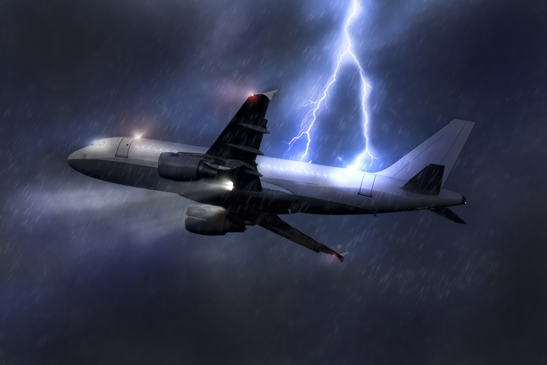
Another existing technology – IP satellite communications that have near global coverage and are used for inflight entertainment applications mostly – could be thrown in the mix of improvements. The greater bandwidth available can facilitate transmission of valuable meteorological information to the cockpit. Such information needs not to be limited to updates of existing data but could allow the transmission of more detailed meteorological information.
Modern on-board weather radars and other weather detection equipment are largely available as a tool to identify and avoid en-route specific undesirable weather formations. EASA recommends on installing the most recent WXR, including turbulence and wind shear warning functions in the aircraft.
Many of those new technologies need to be underpinned with the necessary pilot training to optimally use and understand it. Training needs to make sure pilot are aware of the radar limitations, are capable of setting them up and correctly interpreting the data.
On the ground, data collected by the on-board weather radars could be extremely helpful to improve ground-based weather radars information. This would generate a more comprehensive overview of adverse weather along a trajectory. Topped up with a MET-portal for Europe – a one-stop-shop point of access to meteorological information – pilots, network managers & controllers would be equipped with handy tools to operate safely and efficiently in adverse weather.
In the era of high definition, interactive displays & the Electronic Flight Bag (EFB) a better presentation of existing meteorological data is within reach!
The suggestions put forward by EASA are positive and largely reflect ECA’s recommendations. Last week’s Weather Forum organised by EUROCONTROL was another good news. In gathering air navigation service providers (ANSPs), airports, airlines and front-end users the goal of the Network Manager was to build in resilience to network-wide weather events a routine part of operational and business planning. ECA added its voice on this occasion and hopes that a set of sound procedures to improve weather management will be issued as a concrete outcome and implemented in the short- and medium-term.
The recommendations to improve the exchange of meteorological information, display the data decently, and integrate it seamlessly in the decision-making chain as well as the proposals to increase the collaborative approach across the European network are a welcome – even if delayed – development. With joint efforts, aviation stakeholders can finally lift off the ‘fog’ from the black & white weather charts.